
The Long Run Institute
USING THE PAST TO SHAPE THE FUTURE
THE LONG RUN INSTITUTE
The Long Run Institute (LRI) is an independent, non-profit forum for academic experts, business leaders & public policymakers. It provides insights from the historical analysis of long-run forces and trends to provide context and deepen understanding of the grand challenges facing businesses and government.
We believe that by understanding the past, we can better appreciate the processes that have created the present and how they will shape the future trajectory of businesses, economies and societies.
Through the organisation of high-impact events, the LRI creates a platform for dialogue to exchange knowledge and stimulate ideas, giving participants the opportunity to reflect on and discuss parallels from the past, and consider how these lessons apply to their own organizations.
NEWS & ARTICLES

UCL Scholars and a Cup of Tea: E5, E6, E7, E8
Join Dr. Judy Z. Stephenson in her latest tea break discussions with UCL scholars: Excluded workers and human rights; How to prevent disasters; Rethinking Britain in India; and Jeremy Bentham, the British philosopher, economist, jurist, legal reformer and founder of modern utilitarianism.

The arsonists of the moment need not win
What begins with a silent home movie of the Glorious Twelfth unfolds into a reflection on faith, belonging, and the long arc of peace. Through family history and Belfast’s hard-won lessons, Dr. Laurence B. Mussio argues in The Globe and Mail that reconciliation is not betrayal—it is an act of courage.

Professor Judy Stephenson: Big ideas and a cup of tea (E2, E3, E4)
LRI Director and UCL professor Judy Stephenson continues her engaging dialogues with leading UCL scholars, inviting viewers to connect with some of today’s most compelling academic voices.
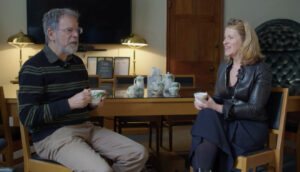
A Cup of Tea: The Human Consequences of AI
In this new University College London Press series, host and LRI Director Judy Stephenson asks 10 serious questions of some of UCL’s leading academics. Over this particular cup of tea, Professor Stephenson explores the human-AI connection with anthropology Professor Daniel Miller. Noting that AI is becoming increasingly anthropomorphised, the discussion explores how we assign meaning and value to technology as we integrate it ever more deeply into our lives.
UPCOMING EVENTS 2026
The Long Run Institute is delighted to sponsor doctoral students to attend the Economic History Society's Centenary conference at the London School of Economics and Political Science from the 10th to the 12th of April 2026. See the program for some of the most fresh and innovative scholarship in economic and social history today. We are delighted to wish economic historians everywhere a scholarly, busy, and fruitful 100th birthday.
Managing Extreme Risk and Uncertainty in an Increasingly Volatile World
The video clips below are taken from a Long Run Institute conference, 'Managing Extreme Risk and Uncertainty in an Increasingly Volatile World', recorded live on 24 September 2021.